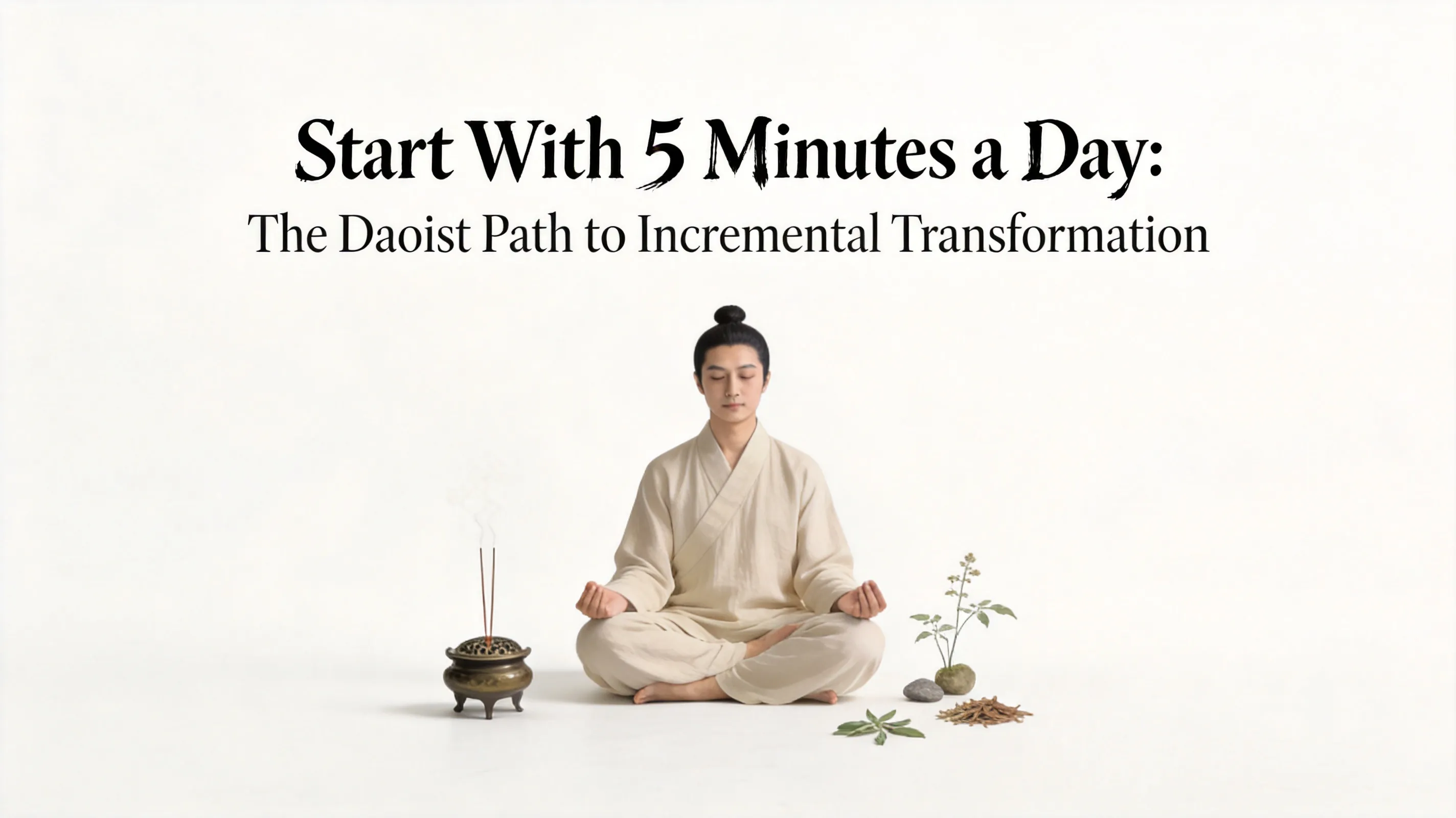
Start With 5 Minutes a Day: A Daoist Guide to Wellness
In the modern world, we are often conditioned to believe that meaningful change requires grand gestures, exhaustive effort, and radical shifts in lifestyle. We are told that unless we spend hours at the gym or commit to lengthy retreats, our efforts toward wellness are insufficient. However, the ancient wisdom of Daoism offers a more profound and sustainable perspective: the most significant transformations begin with the smallest movements. By dedicating just five minutes a day to intentional practice, we align ourselves with the natural flow of the universe, known as the Dao.

The Daoist philosophy emphasizes the principle of "Wu Wei," or non-forcing. This does not mean inaction, but rather effortless action that is in harmony with the natural order. When we attempt to force ourselves into rigorous, unsustainable routines, we create internal friction and resistance. Conversely, starting with five minutes allows us to bypass the ego’s resistance and cultivate a "Ziran" (natural) state of being. This article explores how five minutes of daily practice can cultivate your life force (Qi), balance your internal landscape, and lead to a life of profound peace and vitality.

## The Philosophy of Small Beginnings

Laozi, the legendary founder of Daoism, famously wrote in the Tao Te Ching that "a journey of a thousand miles begins with a single step." This is not merely a motivational quote but a fundamental observation of how the universe functions. In nature, a mighty oak tree begins as a tiny acorn. A great river starts as a small trickle of melting snow. Development is slow, steady, and incremental. When we apply this to our health and spiritual well-being, we realize that consistency is far more potent than intensity.

From a Daoist perspective, our internal energy, or Qi, responds to rhythm. Just as the seasons transition gradually and the tides follow a predictable cycle, our bodies and minds thrive on regular, gentle nourishment. A five-minute practice acts as a "seed" of intention. When planted daily in the fertile soil of our routine, it inevitably grows. It creates a "Yin" space in an otherwise "Yang" and chaotic world, providing a foundation for long-term health and clarity.

## The Benefits of a Five-Minute Daily Practice


    - **Regulation of the Nervous System:** Five minutes of deep, abdominal breathing signals to the nervous system that it is safe to shift from "fight or flight" (Sympathetic) to "rest and digest" (Parasympathetic). This lowers cortisol levels and reduces chronic inflammation.

    - **Cultivation of Mindfulness (Yi):** In Daoism, the "Yi" is the wisdom mind or intent. By dedicating a specific window of time to being present, we sharpen our focus and become more aware of the subtle shifts in our physical and emotional bodies.

    - **Harmonizing Qi Flow:** Stagnation is the root of disease in Traditional Chinese Medicine. Even brief movements or quiet contemplation can break up energetic blockages, ensuring that blood and life force circulate freely to all organs.

    - **Building Self-Trust:** One of the greatest psychological benefits of the five-minute rule is the building of integrity. When you keep a small promise to yourself every day, you strengthen your internal resolve and diminish the "Monkey Mind" that thrives on distraction.

    - **Lowering the Barrier to Entry:** Many people abandon wellness journeys because they feel overwhelmed. Five minutes is a duration that is virtually impossible to argue against, making it a sustainable gateway to deeper practices.


## Practical Tips: How to Use Your Five Minutes

The beauty of a five-minute practice is its versatility. Depending on your needs at any given moment, you can choose a practice that balances your current state. If you feel sluggish, you may need a movement-based practice (Yang). If you feel anxious or overstimulated, you may need a stillness-based practice (Yin).

## 1. The Art of Daoist Breathing (Tu Na)

The breath is the bridge between the body and the spirit. To practice "Tu Na," sit comfortably with your spine straight but not rigid. Place your hands on your lower abdomen, just below the navel (the Lower Dantian). Inhale slowly through your nose, feeling your belly expand like a balloon. Exhale softly, feeling the belly contract. Do not force the breath; let it be deep, long, fine, and slow. Doing this for five minutes oxygenates the blood and centers the mind in the body’s gravity center.

## 2. Standing Like a Tree (Zhan Zhuang)

This is a foundational practice in Qigong. Stand with feet shoulder-width apart, knees slightly bent, and arms held as if encircling a large tree. Keep your gaze soft and your shoulders relaxed. This practice builds "rooting" energy. It strengthens the legs, opens the joints, and teaches the body how to find relaxation within structure. Five minutes of standing meditation can be more physically and mentally grounding than an hour of conventional exercise.

## 3. Joint Lubrication and Gentle Stretching

According to Daoist thought, aging begins in the joints. When joints become stiff, Qi cannot flow. Spend five minutes gently rotating your ankles, knees, hips, wrists, and neck. Use slow, circular motions. Visualize light or warmth flowing into the joints as you move. This "unblocking" process keeps the body supple and prevents the accumulation of "stale Qi."

## 4. The Inner Smile

This is a classic Daoist meditation where you direct the energy of a smile inward. Close your eyes and visualize a warm, golden light at the "Third Eye" point between your brows. Let this light transform into a gentle smile. Direct this smiling energy down into your heart, lungs, liver, kidneys, and stomach. This practice transforms negative emotional charge into "Virtue energy," fostering a sense of internal gratitude and self-compassion.

## 5. Conscious Observance of Nature

If you have access to a window or a small outdoor space, spend five minutes simply observing the natural world without judgment. Watch the movement of the wind through leaves or the way light hits a stone. This aligns your "Hun" (ethereal soul) with the rhythms of the Earth, reminding you that you are not separate from the Dao, but an integral part of its unfolding.

## Overcoming the "Not Enough" Trap

The greatest obstacle to starting a five-minute practice is the voice in our heads that says, "This isn't doing anything." This is the voice of the ego, which values complexity over consistency. In Daoist alchemy, the process of change is compared to the cooking of a meal. If you turn the heat up too high (intensity), you burn the food. If you keep the heat at a steady, appropriate temperature (consistency), the transformation occurs naturally.

If you find yourself skipping your five minutes, ask yourself why. Often, we resist stillness because we are afraid of what we might feel when the distractions of the world are stripped away. Accept this resistance as part of the path. Even if you spend your five minutes simply noticing how restless you feel, you are still practicing. You are witnessing the state of your internal "weather" without being swept away by the storm.

## Integrating Practice into Daily Life

To ensure your five-minute practice becomes a permanent part of your life, try to link it to an existing habit. This is sometimes called "habit stacking." You might practice your breathing while the morning tea is steeping, or do your joint rotations immediately after waking up. By anchoring the new practice to an established ritual, you reduce the "decision fatigue" associated with starting something new.

Remember that the goal of Daoist wellness is not to become a perfect practitioner, but to become a more "authentic" human being. Your five minutes should not feel like a chore or a moral obligation. Instead, view it as a gift—a brief period of sanctuary where you can return to your "Original Nature."

## The Long-Term Impact of Small Rhythms

As weeks turn into months, you will notice subtle shifts. You may find that you react to stress with more composure. You might notice that your sleep is deeper or that your physical body feels less constricted. This is the "compounding effect" of Qi cultivation. Just as a single drop of water eventually carves a canyon through stone, your five-minute daily practice will eventually reshape the landscape of your life.

Eventually, the five minutes may naturally expand to ten, twenty, or thirty minutes. But even if it doesn't, the five minutes remain sacred. The quality of the presence you bring to those five minutes is far more important than the duration of the clock. In the eyes of the Dao, time is relative; a single moment of true presence can contain the essence of eternity.

## Conclusion: Returning to the Source

Wellness is not a destination to be reached; it is a way of traveling. By starting with five minutes a day, you honor the Daoist principle of "starting from where you are." You acknowledge that your health and peace of mind are worth prioritizing, yet you do so with a spirit of gentleness and patience.

The world will always demand more of your time, your energy, and your attention. By reclaiming just five minutes, you draw a circle around your soul and declare it a space of harmony. This small act of rebellion against the frantic pace of modern life is the first step toward true mastery. Embrace the power of the small, trust in the process of natural growth, and watch as your five minutes of practice transform into a lifetime of vitality and wisdom.

May your journey be steady, your breath be deep, and your heart be at peace.