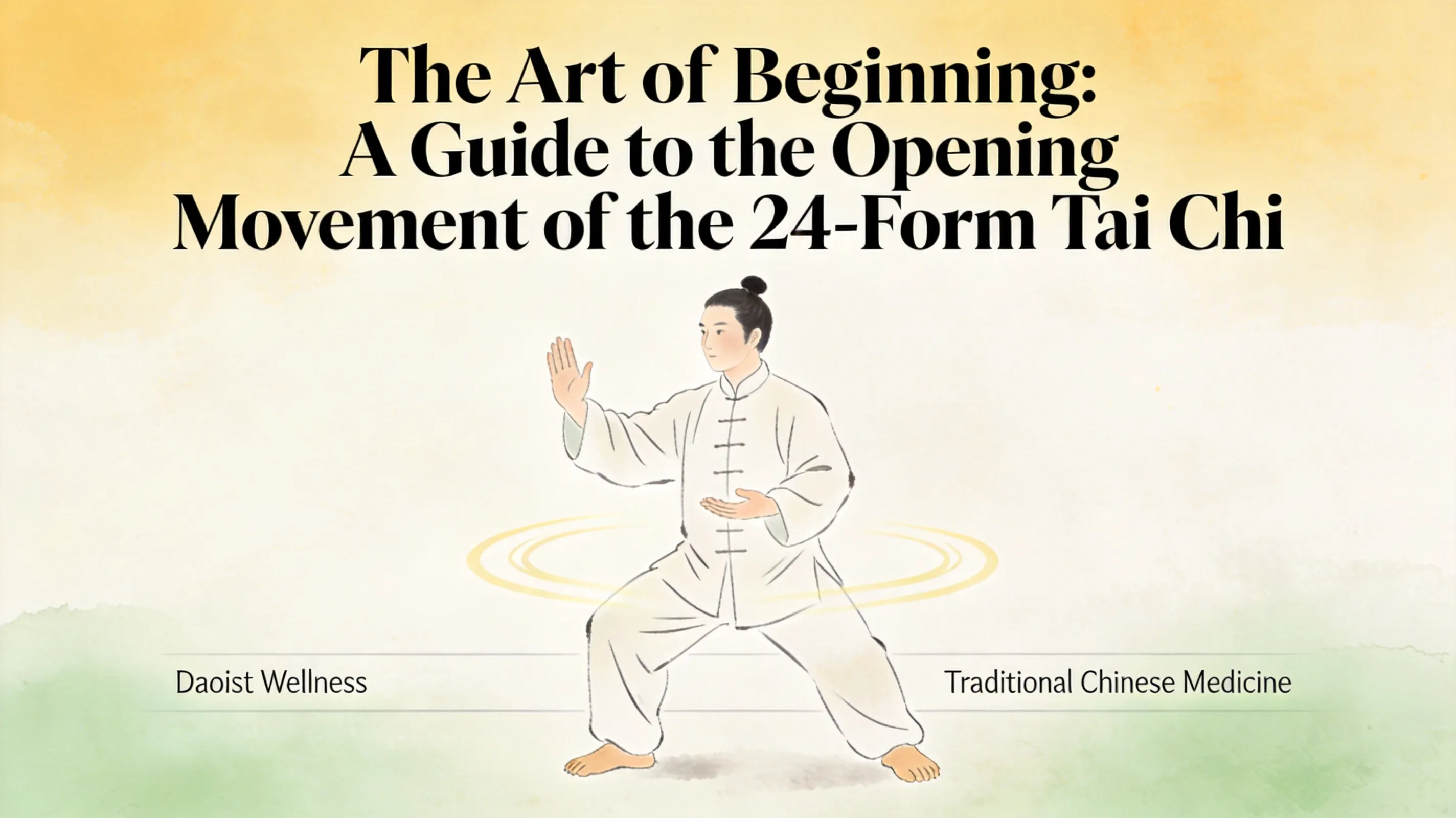
The Art of Beginning: A Guide to the Opening Movement of the 24-Form Tai Chi
In the Daoist tradition, the beginning of any endeavor contains the seed of its entirety. This philosophy is perfectly encapsulated in the opening movement of the 24-Form Tai Chi, often referred to as "Commencing" or "Opening Posture" (Qǐshì). While it may appear to be a simple act of raising and lowering the arms, this movement is a profound transition from the mundane world into a state of moving meditation. It is the bridge between Wuji—the primordial state of emptiness—and Taiji—the manifestation of yin and yang in harmonious motion.
For the practitioner, the opening movement is not merely a warm-up. It is a recalibration of the nervous system, a grounding of the spirit, and a conscious invitation for Qi (vital energy) to begin its rhythmic circulation through the meridians. By mastering the subtleties of this first step, you lay the foundation for a practice that is structurally sound, energetically vibrant, and spiritually centered.
The Philosophical Foundation: From Wuji to Taiji
Before the first physical movement occurs, the practitioner stands in a state known as Wuji. In Daoist cosmology, Wuji represents the infinite void, a state of absolute stillness where no distinctions exist. Physically, this is expressed through a neutral standing posture: feet together, arms hanging naturally at the sides, and the mind quieted.
As you prepare to move, you transition from Wuji into Taiji. Taiji represents the "Great Ultimate," the birth of duality and the interplay of opposing forces. The act of stepping out to shoulder width is the first manifestation of this duality—creating a left and a right, a substantial (weighted) and insubstantial (unweighted) leg. Understanding this philosophical shift allows the practitioner to move with intention (Yi), ensuring that the physical body follows the lead of the internal spirit.
Health and Wellness Benefits of the Opening Movement
The opening movement offers a wealth of physiological and energetic benefits that extend far beyond the Tai Chi mat. By focusing on these specific areas, practitioners can enhance their overall well-being:
-
Nervous System Regulation: The slow, rhythmic nature of the movement activates the parasympathetic nervous system, lowering cortisol levels and inducing a state of "rest and digest."
-
Improved Proprioception: The deliberate shift of weight fosters a deeper awareness of the body's position in space, which is essential for balance and fall prevention.
-
Joint Decompression: By "sinking" the weight and maintaining soft joints, practitioners alleviate pressure on the lower back and knees, promoting longevity in the musculoskeletal system.
-
Diaphragmatic Breathing: The coordination of arm movements with the breath expands lung capacity and improves the oxygenation of the blood.
-
Circulatory Stimulation: The gentle raising and lowering of the limbs act as a pump for the lymphatic system and blood, encouraging fluid movement throughout the extremities.
Step-by-Step Guide to the Opening Movement
Follow these steps with a sense of patience and curiosity. Remember that in Tai Chi, the internal feeling is more important than the external shape.
Step 1: Establishing the Wuji Posture
Stand with your feet together, toes pointing forward. Let your arms hang naturally by your sides. Imagine a silver thread pulling the crown of your head (the Baihui point) toward the heavens, gently lengthening the spine. Tuck the chin slightly and allow your gaze to soften, looking toward the horizon without focusing on any single object. Sink your weight into the bubbling well points (Yongquan) on the soles of your feet.
Step 2: The Lateral Step
Shift your entire weight onto your right leg, keeping the knee slightly flexed. As the left leg becomes "empty," peel the left heel off the floor, followed by the ball of the foot. Step out quietly to the left, touching down with the toes first and then the heel. Your feet should now be parallel and shoulder-width apart. Distribute your weight evenly (50/50) between both legs. This is the moment where stability is established.
Step 3: Sinking the Qi
Before the arms move, imagine your tailbone dropping slightly, as if you were about to sit on the edge of a high stool. This "sinking" settles the energy in the lower Dantian (the energetic center located about two inches below the navel). Ensure your knees are aligned with your toes and are not collapsing inward.
Step 4: The Ascent of the Arms
Inhale slowly through the nose. As you inhale, allow your arms to rise slowly in front of you. The movement should feel as though the arms are being lifted by water or floating upward on a cloud. Keep the wrists relaxed and the fingers pointing slightly downward. The arms should rise to shoulder height and remain shoulder-width apart. Maintain a slight curve in the elbows; never lock your joints.
Step 5: The Descent and Settling
As you begin to exhale, draw the elbows back slightly toward the body, and let the wrists soften so the palms face forward and down. Slowly lower the hands as if pressing down on a soft cushion of air. Synchronize this descent with a slight deepening of the knee bend. As the hands reach hip level, the movement should conclude with a feeling of total groundedness. The energy should feel full in the palms and settled in the feet.
Refining the Internal Connection
Once the external choreography is familiar, the practitioner must look inward to the "Neigong" or internal work. The opening movement is an ideal time to practice the following Daoist principles:
-
Song (Release): This is the art of active relaxation. It is not limpness, but the removal of unnecessary tension. As the arms rise, ensure the shoulders do not "hike" toward the ears. Release the tension in the chest and let the breath drop deep into the belly.
-
Peng (Expansive Energy): Even as you relax, maintain a sense of internal fullness. Imagine your body is like a balloon—soft yet pressurized from within. This prevents the movements from becoming "hollow" or weak.
-
Coordination of the Three Heavens: Seek to synchronize the movement of the breath, the movement of the hands, and the movement of the legs. When the hands stop, the breath should reach its natural end, and the knees should reach their final degree of flexion.
Practical Tips for Success
Achieving mastery in the opening movement requires consistent attention to detail. Consider these tips during your daily practice:
-
Focus on the "Bubbling Well": Keep your awareness on the Yongquan point on the soles of your feet. Feeling the ground beneath you provides the stability necessary for the upper body to remain light and fluid.
-
Move Like Water: Avoid jerky or robotic motions. Visualize the air around you as having the density of water. This resistance helps build "silk-reeling" energy and ensures your movements remain smooth and continuous.
-
The Hollow Armpit: Imagine holding a small, fragile egg under each armpit. This prevents the arms from collapsing against the ribs and keeps the heart meridian open and unobstructed.
-
Eye Focus: Your eyes should follow the general direction of the movement but remain "internalized." Do not stare at your hands; instead, sense them through your peripheral vision.
Common Mistakes to Avoid
Even seasoned practitioners can fall into habits that disrupt the flow of Qi. Be mindful of these common pitfalls:
One frequent error is "leaning into the future." This happens when the torso tilts forward as the arms rise. Keep the spine vertical, as if it were a plumb line suspended from the sky. Another common mistake is "locking the knees." When the weight is distributed, ensure the knees retain a microscopic bend to allow for the free flow of energy through the legs.
Finally, avoid "shallow breathing." Many beginners hold their breath or breathe only into the upper chest during the opening. This creates tension in the neck and shoulders. Always strive for abdominal breathing, letting the belly expand on the inhale and gently contract on the exhale.
Conclusion: The Power of a Single Breath
The opening movement of the 24-Form Tai Chi is a masterpiece of Daoist engineering. It teaches us how to move from stillness into action without losing our center. It reminds us that every great journey begins with a single, conscious breath and a grounded step. By dedicating time to perfecting this simple sequence, you are not just learning a martial arts form; you are cultivating a way of being that is balanced, resilient, and deeply connected to the natural rhythms of the universe.
As you continue your practice, treat each "Commencing" posture as a fresh start. Whether you have performed it ten times or ten thousand times, there is always a new layer of softness to discover, a deeper level of sinking to achieve, and a more profound sense of peace to inhabit. In the stillness of the opening, we find the strength to meet the world with grace.