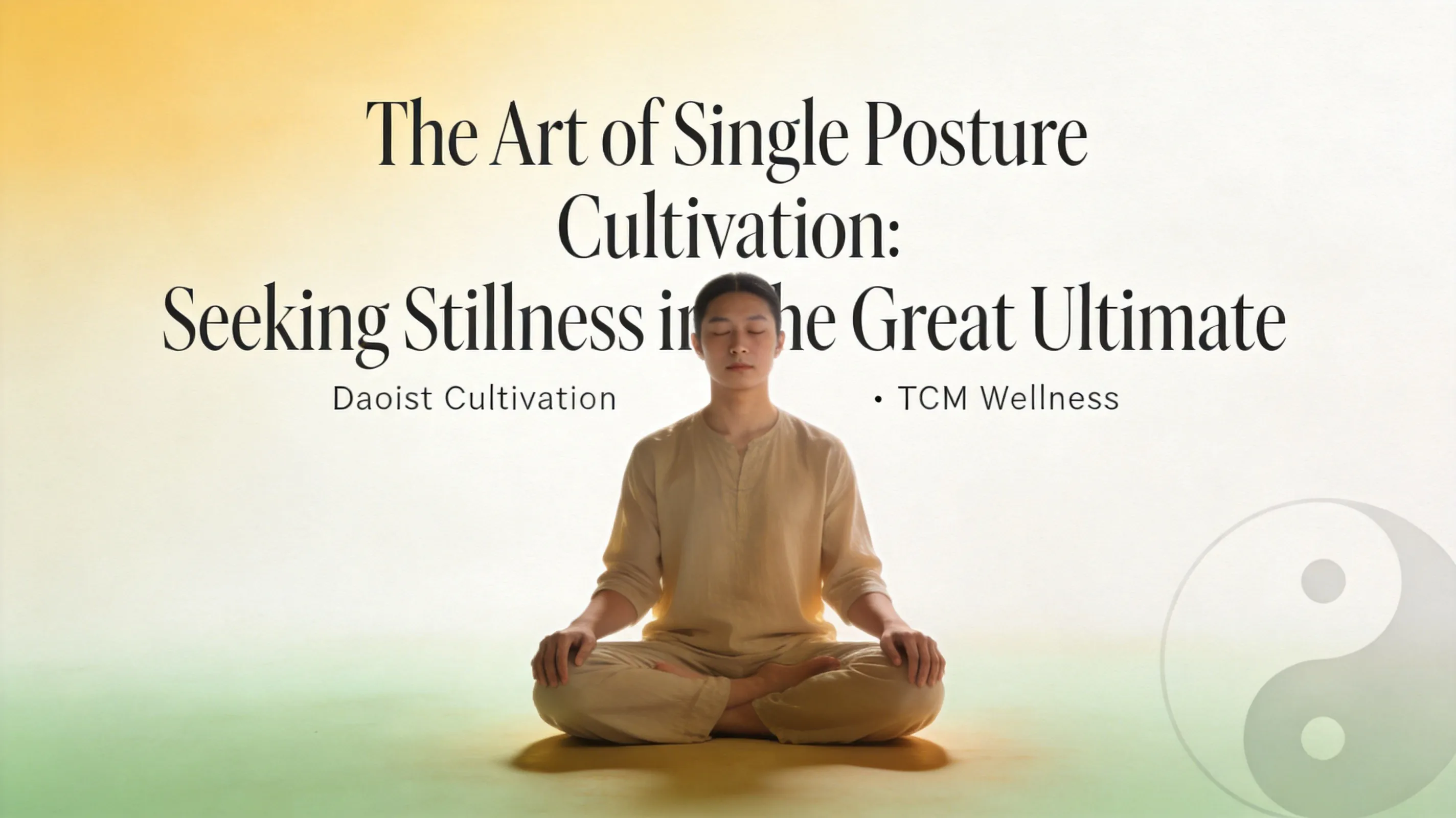
The Art of Single Posture Cultivation: A Daoist Guide to Embodied Naturalness
In the modern world, progress is often measured by accumulation—how many forms we know, how many techniques we have mastered, and how quickly we can transition from one movement to the next. However, the ancient wisdom of the Daoist tradition offers a different perspective on growth. It suggests that true mastery is not found in the breadth of knowledge, but in the depth of a single, profound experience. This is the practice of Zhan Zhuang, or "standing like a tree," and the method of repetitive posture cultivation. By isolating a single movement or static position and practicing it until it feels natural, we align our internal energy (Qi) with the rhythms of the universe.
The concept of "naturalness" or Ziran is central to Daoist philosophy. It refers to a state of being that is spontaneous, unforced, and in harmony with the Way. When we first attempt a specific posture—be it a Taiji opening, a Qigong stance, or a simple meditative seat—the body often feels fragmented. Muscles are tense, the breath is shallow, and the mind is busy correcting the limbs. Through the dedicated repetition of a single posture, we strip away these artificial layers of effort until the posture ceases to be something we "do" and becomes something we "are."
The Philosophy of One: Why We Focus on the Single Posture
In the Dao De Jing, Laozi writes, "The Tao produced One; one produced Two; two produced Three; three produced all things." By returning to the "One"—a single posture—we are essentially retracing our steps back to the source of our vitality. When we practice many movements, our attention is scattered. We think about what comes next, worrying about the choreography. When we commit to one posture, the mind has nowhere to go. It must settle into the body, eventually leading to a state of "meditation in action."
This practice is a form of internal alchemy. By holding or repeating a single frame, we create a vessel. Within this vessel, the heat of our attention transforms the "Jing" (physical essence) into "Qi" (vital energy), and eventually into "Shen" (spirit). This transformation cannot happen if the vessel is constantly leaking energy through unnecessary movement or mental distraction. The single posture becomes a crucible for self-discovery.
The Benefits of Repetitive Posture Practice
Practicing a single posture until it becomes a second nature yields profound benefits that extend far beyond physical alignment. These benefits manifest across the physical, energetic, and mental landscapes of the practitioner.
-
Structural Integration: Constant repetition allows the nervous system to find the most efficient way to support the body's weight. Instead of relying on superficial muscles, the body begins to use the skeletal structure and the deep connective tissues (fascia), leading to a feeling of "effortless power."
-
Dissolution of Blockages: In Daoist medicine, pain and illness are seen as stagnation of Qi. By holding a posture for an extended period, we put gentle pressure on the meridians. Much like water building up behind a dam, the internal pressure eventually flushes through blockages, restoring the smooth flow of energy.
-
Neuromuscular Efficiency: The "natural" feeling we seek is actually the result of myelination—the strengthening of neural pathways. When a movement is repeated thousands of times, the brain no longer needs to consciously direct it. The movement becomes part of the autonomic system, similar to breathing.
-
Cultivation of Ding (Stillness): Focusing on one thing develops a high level of concentration. This mental stability carries over into daily life, allowing the practitioner to remain calm and centered amidst the chaos of the external world.
-
Refinement of Proprioception: You develop an "internal eye." You begin to feel the subtle alignment of the crown of the head with the perineum, the tucking of the tailbone, and the hollow of the chest without needing a mirror.
The Path to Naturalness: Practical Steps for Practice
To move from a state of awkward effort to a state of natural grace, one must follow a disciplined yet gentle path. The following steps outline how to approach the cultivation of a single posture over weeks, months, or even years.
1. Selecting the Vessel
Choose a posture that resonates with your current needs. For beginners, the "Wuji" stance—standing with feet shoulder-width apart, knees slightly soft, and arms hanging naturally—is the foundation of all Daoist arts. For those seeking to strengthen their legs and rooting, a "Ma Bu" (Horse Stance) or "San Ti Shi" (Trinity Stance) may be chosen. The key is to select a posture that you can realistically hold or repeat without causing acute injury, though moderate discomfort is a necessary part of the refining fire.
2. The Three Adjustments (San Tiao)
In every session, apply the Daoist principle of the Three Adjustments: Body, Breath, and Mind. First, adjust the body by seeking "Song"—a state of active relaxation where the muscles hang off the bones like wet silk. Second, adjust the breath, moving toward abdominal breathing that is deep, slow, and silent. Finally, adjust the mind by "listening" inwardly rather than thinking outwardly.
3. The Rule of Micro-Adjustments
Naturalness is not found by staying rigid. It is found through constant, microscopic corrections. As you hold the posture, scan your body. Are your shoulders creeping up? Is your weight too far forward on your toes? Softly correct these deviations. Over time, these corrections happen faster and more subtly, until the body maintains the correct "shape" automatically.
4. Working with the "Threshold of Resistance"
To make a posture natural, you must stay in it past the point where the mind wants to quit. This is often called the "threshold of resistance." When the legs begin to shake or the mind becomes restless, this is where the real practice begins. By staying relaxed during discomfort, you teach your nervous system that it is safe. This "safe" signal is what eventually allows the posture to feel comfortable and natural.
5. Repetition through Variation
If you are practicing a moving posture (such as a single palm change or a Taiji "Brush Knee"), repeat the movement in cycles. Perform it ten times very slowly, then ten times with a focus on the breath, then ten times focusing on the connection to the ground. This "multi-faceted repetition" ensures that the mind stays engaged while the body builds muscle memory.
Overcoming the "Wall of Boredom"
The greatest obstacle to mastering a single posture is the modern mind's craving for novelty. Daoist masters often speak of the "Wall of Boredom." When you practice the same thing every day, the ego will eventually complain that it is not learning anything new. It will suggest that you move on to a more "advanced" form.
In the Daoist view, boredom is simply a sign of superficiality. It means you are only looking at the surface of the posture. If you look deeper, you will find that no two repetitions are the same. One day the Qi feels heavy; the next, it feels like light. One day the bones feel dense; the next, they feel hollow. By pushing through the boredom, you reach a level of "Internal Interest," where the subtle shifts in your internal landscape provide all the variety you need.
The Signposts of Success
How do you know when a posture is becoming natural? There are several traditional markers of progress in Daoist cultivation:
-
The Disappearance of the Limbs: You reach a state where you are no longer consciously aware of individual arms or legs. The body feels like a single, unified orb of energy.
-
Spontaneous Heat: As the posture aligns and the Qi begins to flow without obstruction, you may feel a pleasant warmth in the lower Dantian (the center of gravity in the lower abdomen) or the palms of the hands.
-
Weightlessness: Paradoxically, the more "rooted" you become to the earth, the lighter the upper body feels. It is often described as being "suspended from above by a silk thread."
-
Timelessness: A practice session that lasts thirty minutes feels like it only lasted five. The mind has entered a "flow state," which is a hallmark of Ziran.
Integration into Daily Life
The ultimate goal of practicing a single posture until it is natural is not merely to be good at standing in a room; it is to carry that quality of "naturalness" into the world. The alignment you find in your seated meditation should become the alignment you have while sitting at your desk. The rooting you find in your standing practice should become the stability you feel when facing a stressful situation at work.
In Daoism, we say, "The small hidden person lives in the mountains; the great hidden person lives in the city." This means that true cultivation is tested in the marketplace. By making a single posture natural, you create a "home base" within your own body. No matter what happens externally, you can always return to that internal sense of structure and peace.
Conclusion
The journey of a thousand miles begins with a single step, but Daoist wisdom suggests that the journey can also be found within a single stance. By narrowing our focus, we expand our depth. The practice of repeating a single posture until it feels natural is a practice of returning to our original nature—the state before we were conditioned by tension, hurry, and distraction.
Be patient with yourself. Like a stone being polished by a river, the rough edges of your posture will be smoothed away by the consistent flow of your practice. Do not seek results; instead, seek the practice itself. When the posture is correct, the Qi follows. When the Qi follows, the mind settles. And when the mind settles, the Dao is revealed. Through the "One," we find the "All."