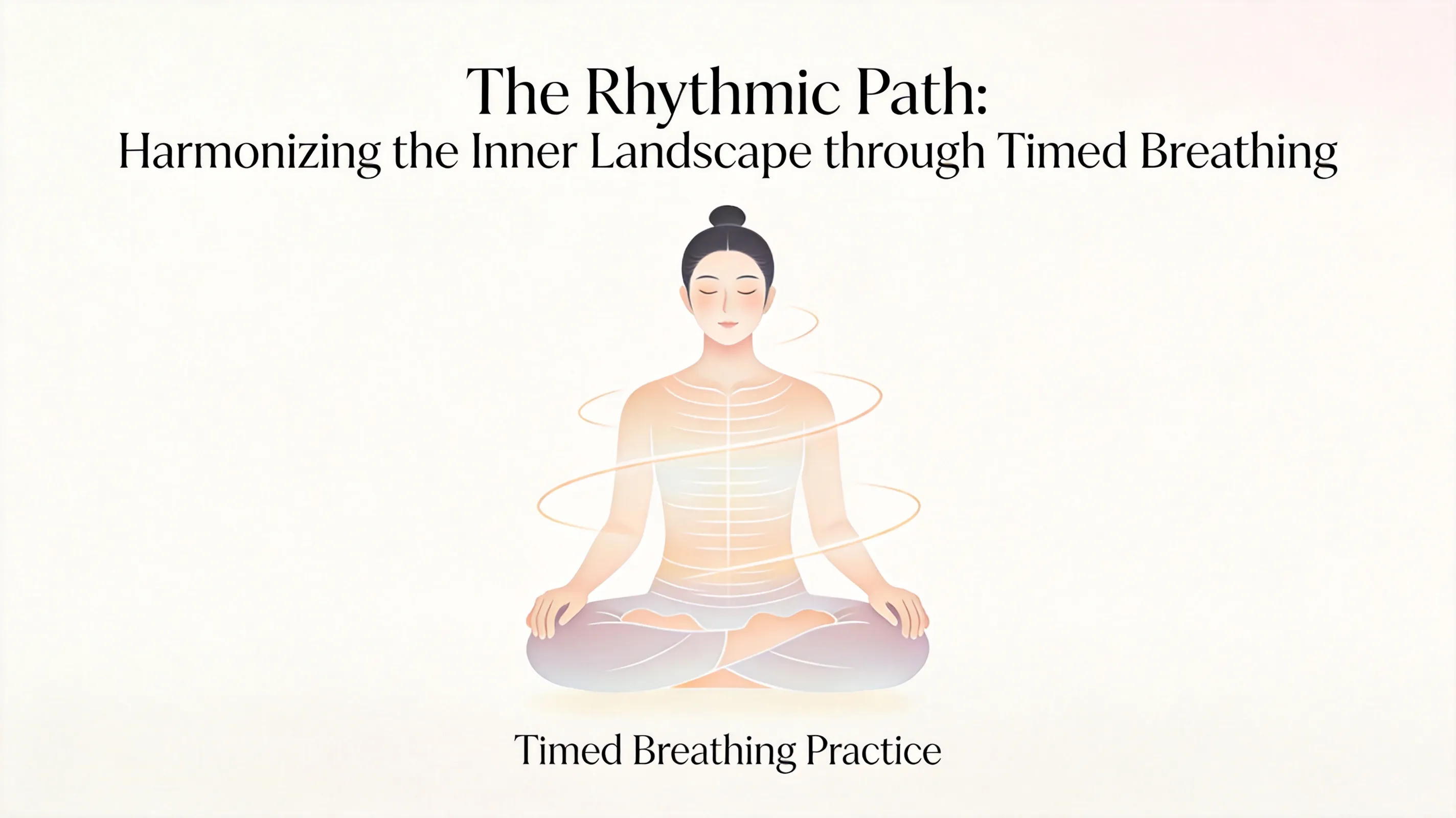
The Rhythmic Path: Mastering Daoist Breath with Precision Tools
In the ancient traditions of Daoist cultivation, the breath is regarded as the bridge between the physical body and the ethereal spirit. It is the primary vehicle for Qi, the vital life force that animates all existence. For millennia, sages and practitioners have retreated to mountain hermitages to master the subtle art of "Tu Na" (expelling the old and inhaling the new). However, in our modern, frantic era, the natural rhythm of our breath is often disrupted by stress, artificial lighting, and the relentless pace of digital life. To reclaim this internal harmony, the integration of traditional wisdom with modern precision—specifically the use of metronomes and breathing timers—offers a profound path toward wellness and spiritual clarity.
The Dao, or the Way, teaches us that the universe operates in cycles: day and night, inhalation and exhalation, expansion and contraction. When our personal rhythm falls out of alignment with these universal cycles, we experience stagnation, fatigue, and disease. By using a metronome or a digital timer to set a deliberate pace for our breathing, we are not merely performing a mechanical exercise; we are recalibrating our internal clock to resonate with the fundamental pulse of the cosmos. This article explores how the disciplined use of timing tools can deepen your Daoist practice and transform your health from the cellular level upward.
The Philosophy of Rhythmic Breath in Daoist Alchemy
Daoist internal alchemy, or Neidan, views the human body as a laboratory. In this laboratory, the breath acts as the bellows, fanning the internal fires that transmute raw essence (Jing) into vital energy (Qi) and eventually into spirit (Shen). If the bellows are pumped erratically, the fire becomes unstable—either flickering out or burning too hot and damaging the vessel. Precision is therefore not a modern imposition, but a traditional requirement for advanced cultivation.
The concept of "Regulating the Breath" (Tiao Xi) is the third of the five essential regulations in Daoist practice. It follows the regulation of the body and precedes the regulation of the mind. The ancients noted that when the breath is long, deep, and slow, the mind naturally becomes still. However, the human mind is notoriously deceptive; we often believe we are breathing slowly when, in reality, our pace is inconsistent. A metronome serves as an "external master," providing an objective standard that prevents the ego from rushing the process. It anchors the practitioner in the present moment, ensuring that each phase of the breath—the inhale, the transition, the exhale, and the pause—receives its proper due.
Benefits of Using a Metronome for Breathing Practice
Integrating a rhythmic timer into your daily wellness routine yields a multitude of benefits that span the physical, emotional, and energetic realms. By removing the guesswork from your practice, you allow the nervous system to surrender more fully to the process.
- **Stabilization of the Autonomic Nervous System:** Most modern individuals live in a state of sympathetic dominance, otherwise known as the "fight or flight" response. By setting a metronome to a slow, consistent beat—such as six breaths per minute—you stimulate the vagus nerve and trigger the parasympathetic response. This induces a state of "rest and digest," allowing the body to repair itself.

- **Cultivation of Internal Stillness:** The repetitive click of a metronome or the soft pulse of a timer acts as a focal point for the wandering mind. In Daoism, this is known as "tying the monkey-mind." When the mind is occupied with following the rhythm, it has less room to fret over the past or future.

- **Enhancement of Lung Capacity and Efficiency:** Slow, timed breathing encourages the use of the lower lobes of the lungs, where blood flow is most concentrated. This improves oxygen uptake and the removal of carbon dioxide, nourishing the blood and brightening the complexion—a sign of abundant Qi.

- **Consistency in Energetic Circulation:** For practices like the Microcosmic Orbit, where Qi is guided along the spine and front of the body, a consistent breath ensures that the energy moves at a steady pace. This prevents "energy clumps" or blockages that can occur when the breath is jerky or uneven.

- **Development of Patience and "Wu Wei":** Attempting to force a slow rhythm can cause tension. Using a timer teaches the practitioner the art of Wu Wei, or effortless action. You learn to relax into the rhythm rather than fighting against it, a skill that translates into greater grace in everyday life.
Practical Tips for Setting Your Pace
Beginning a timed breathing practice requires a balance of discipline and gentleness. One must not "strangle" the breath to meet a target; rather, one should invite the breath to expand into the space provided by the timer. Here are practical steps to integrate these tools into your Daoist wellness journey.
- **Start with Your Natural Rhythm:** Before setting a target, use the metronome to measure your current, comfortable breathing rate. Do not judge it; simply observe. If your natural cycle is 10 seconds (5 in, 5 out), this is your baseline.

- **The Golden Ratio of 1:1:** For general health and balancing Yin and Yang, start with an equal ratio. Set your timer so that the inhalation and exhalation are of equal length. A common starting point is 4 seconds for the inhale and 4 seconds for the exhale.

- **Gradual Extension:** In Daoist "Embryonic Breathing," the goal is to make the breath so fine and slow that it becomes almost imperceptible. Every few days, increase the length of your cycles by half a second. Aim to eventually reach a cycle of 10 seconds in and 10 seconds out (3 breaths per minute).

- **The Importance of the "Hollow" Pauses:** Advanced practitioners often incorporate pauses at the top and bottom of the breath. These are moments of "Stillness within Motion." Use the metronome to ensure these pauses are consistent—for example, a 4-2-4-2 ratio (4 in, 2 hold, 4 out, 2 empty).

- **Use Sound Wisely:** If the sharp "click" of a mechanical metronome is too jarring for your meditation, use a digital app with a soft woodblock sound or a gentle "om" tone. The sound should support your relaxation, not trigger a startle response.

- **Posture as the Foundation:** No amount of timing will help if the "flue" of the body is blocked. Sit with a straight spine, tuck the chin slightly to open the Jade Pillow gate at the base of the skull, and allow the abdomen to be soft. This physical alignment allows the timed breath to reach the Dan Tian (the energetic center below the navel).
The Three Stages of Mastery
In the Daoist tradition, progress is measured in stages. When using a metronome or timer, you will likely move through these three phases of development:
The first stage is Regulation. During this phase, the metronome feels like a guide or a trainer. You are conscious of the beat, and you may find it slightly difficult to keep up or slow down. This stage is about breaking old, shallow breathing habits and carving new pathways in the nervous system. It requires the most mental effort, but it is where the most significant physiological changes begin.
The second stage is Synchronization. Here, the boundary between the external beat and your internal movement begins to blur. You no longer feel like you are "following" the timer; rather, you and the timer are moving together. The breath becomes smooth (Xi), long (Chang), and deep (Shen). At this stage, you will notice a profound sense of calm washing over your body during practice, as if you are being rocked by the tide of the ocean.
The final stage is Internalization. Eventually, the external tool is no longer necessary. You have "built the clock" inside yourself. You can evoke the exact rhythm of 4, 6, or 10-second breaths at will, whether you are walking down a busy street or sitting in a quiet room. The metronome has served its purpose as a scaffolding, and now the structure of your Qi is self-supporting. You have achieved a state of "Natural Regulation," where your breath remains rhythmic and deep even when faced with the stresses of the world.
Integrating Rhythmic Breathing into Daily Life
The true test of Daoist wellness is not how one feels on the meditation cushion, but how one carries that peace into the world. Use your breathing timer during mundane tasks to transform them into moving meditations. While commuting, you can set a mental pace or use a silent haptic (vibration) timer on a smartwatch to maintain a calming 1:1 ratio. This prevents the "stress-stacking" that occurs when we unconsciously hold our breath while checking emails or navigating traffic.
Furthermore, consider the "Five Elements" of your environment. Practicing your timed breathing at dawn (Wood element) promotes growth and vitality. Practicing at noon (Fire) requires a more cooling, slower exhale to vent excess heat. Practicing at dusk (Metal) focuses on letting go of the day’s burdens. By adjusting your timed practice to the hours of the day, you harmonize your internal "Microcosm" with the "Macrocosm" of nature.
Conclusion: Returning to the Source
The use of a metronome or breathing timer is not a cold, mechanical intrusion into a spiritual practice. Instead, it is a profound act of devotion to the "Middle Way." It provides the structure within which true freedom can be found. In the words of the ancient texts, "When the breath is regular, the spirit is at peace; when the spirit is at peace, the Dao is found."
By dedicating yourself to a rhythmic practice, you are honoring the ancient Daoist commitment to self-refinement. You are clearing the mists of the mind and stoking the fires of the body. Start today with just five minutes of timed breathing. Set your beat, soften your gaze, and let the rhythm carry you back to your original nature—a state of balance, health, and effortless being. The path of a thousand miles begins with a single, perfectly timed breath.