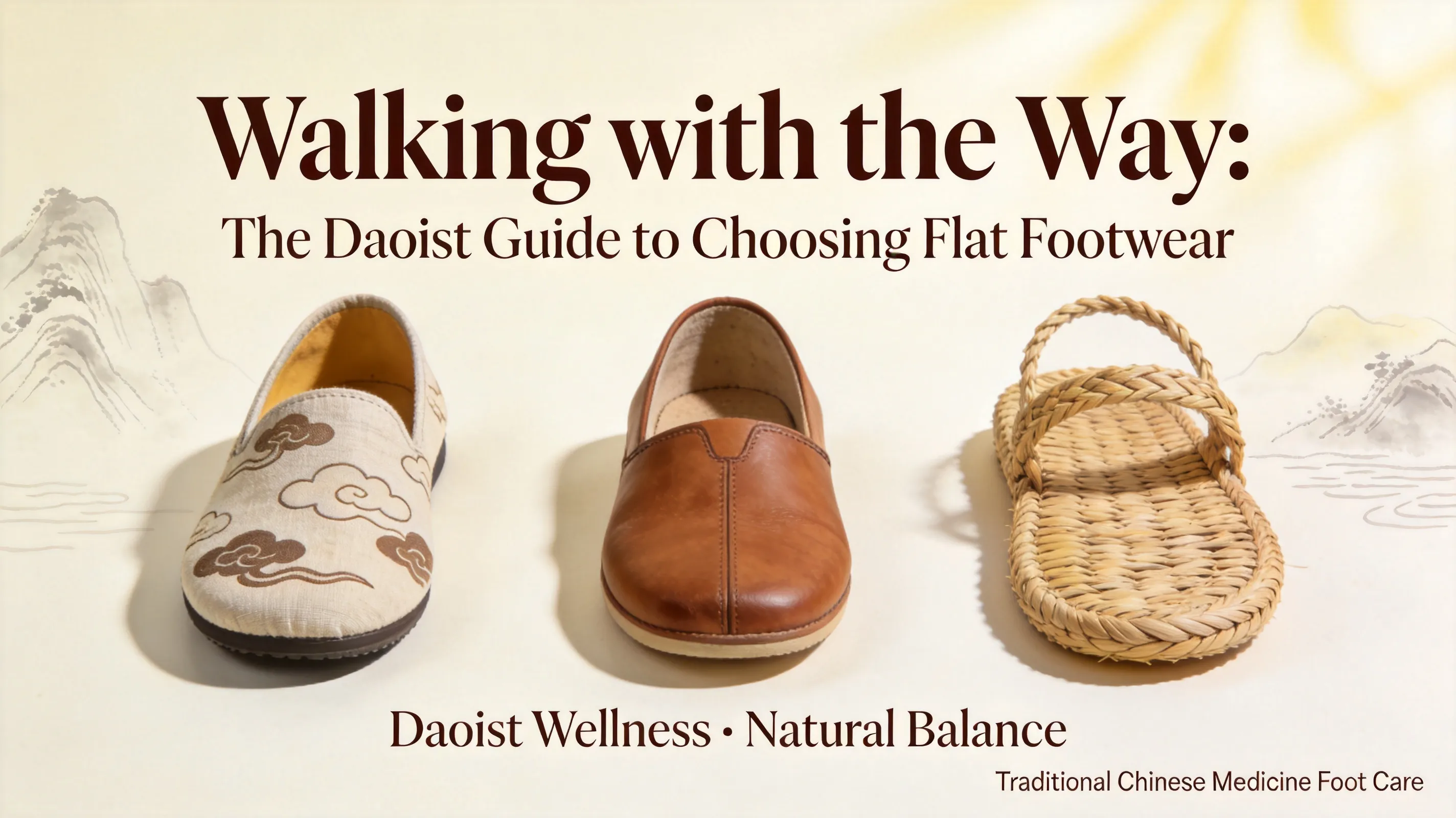
Walking with the Way: A Daoist Guide to Choosing Flat Footwear
In the ancient wisdom of Daoism, the human body is viewed as a bridge between Heaven (Tian) and Earth (Di). To live in harmony with the Dao is to maintain a fluid, unobstructed flow of Qi—the vital life force—throughout this bridge. While many seekers focus on meditation and breathwork, the foundation of our physical existence begins where we meet the ground. Our feet are not merely tools for transport; they are the primary sensory organs that connect our internal landscape to the external world. Choosing the right footwear, specifically flat and minimalist shoes, is a profound act of returning to our natural state, allowing us to walk in alignment with the rhythms of the earth.
Modern society has largely moved away from this organic connection. We encase our feet in rigid structures, elevated heels, and excessive cushioning, effectively silencing the dialogue between our nervous system and the terrain. From a Daoist perspective, this creates a blockage in the Kidney 1 (Yongquan) point, also known as the "Gushing Spring," located on the sole of the foot. By choosing flat footwear, we reopen this spring, allowing the cooling, stabilizing energy of the Earth to rise into our bodies, fostering longevity, balance, and a quiet mind.
The Philosophy of the Gushing Spring
To understand why flat footwear is essential, one must understand the concept of grounding, or "earthing," in the context of Traditional Chinese Medicine and Daoist internal arts. The Yongquan point is the starting point of the Kidney meridian. In Daoist cosmology, the Kidneys are the reservoir of our Jing, or essential essence. When we wear shoes with thick, synthetic soles or elevated heels, we insulate ourselves from the Earth’s natural resonance and distort the mechanical alignment of the Kidney meridian.
Flat footwear allows the foot to sit in its natural, horizontal plane. This alignment ensures that the weight of the body is distributed evenly across the tripod of the foot—the heel, the base of the big toe, and the base of the little toe. When this tripod is level, the "Gushing Spring" is allowed to breathe. As we walk, the rhythmic expansion and contraction of the foot act as a pump for both blood and Qi, sending vitality upward through the legs and into the lower Dantian, our center of gravity and energetic storage. A flat shoe is not just a fashion choice; it is a tool for energetic cultivation.
The Benefits of Returning to a Natural Foundation
The transition to flat footwear offers a multitude of benefits that transcend simple comfort. It is a holistic restoration of the body’s innate intelligence. Below are the primary advantages of adopting a flat, minimalist approach to footwear:
-
Restoration of Natural Alignment: Most modern shoes feature a "heel drop," where the heel is elevated above the forefoot. This minor tilt forces the pelvis to tip forward, creating a compensatory arch in the lower back and tension in the neck. Flat shoes eliminate this "fake" incline, allowing the spine to stack naturally and the psoas muscle to relax.
-
Proprioceptive Awakening: The soles of our feet are home to thousands of nerve endings. Flat, thin-soled shoes provide sensory feedback about the texture and incline of the ground. This heightened awareness, known as proprioception, sharpens the mind and improves balance, reducing the risk of falls as we age.
-
Strengthening the Intrinsic Muscles: In a cushioned shoe, the muscles of the foot become dormant. Flat footwear requires the toes to splay and the arch to support itself. Over time, this builds a strong, resilient foundation, curing many common ailments like plantar fasciitis and collapsed arches.
-
Enhanced Qi Flow: By removing the barrier between the foot and the earth, we facilitate the exchange of electrons and subtle energies. This grounding effect has been shown to reduce inflammation and calm the Shen (spirit), leading to deeper sleep and reduced anxiety.
-
Improved Joint Health: High heels and excessive cushioning change the way our knees and hips absorb impact. Flat shoes encourage a shorter, softer stride where the foot lands underneath the center of mass, protecting the joints from the jarring force of "heel striking."
The Dao of Selection: How to Choose the Right Flat Footwear
Choosing flat footwear requires a shift in perspective. We must move away from the aesthetic of "support" and toward the philosophy of "liberation." In Daoism, the best government is that which governs least; similarly, the best shoe is that which interferes with the foot the least. When shopping for footwear, keep these criteria in mind to ensure you are selecting a pair that honors your biological and energetic blueprint.
1. Seek the "Zero Drop"
The most critical feature of a Daoist-aligned shoe is a zero-drop sole. This means the heel and the forefoot are at the exact same distance from the ground. Many shoes appear flat but still have a hidden internal wedge. Ensure the sole is a consistent thickness from back to front. This allows your Achilles tendon to stretch to its natural length and ensures your calves remain supple rather than chronically contracted.
2. Prioritize a Wide Toe Box
Nature designed our toes to splay outward to provide stability. Most conventional shoes are tapered, pinching the toes together and causing deformities like bunions. A proper flat shoe must have a wide, anatomical toe box. When your toes have room to move, the "Wood" element within the body—associated with the Liver meridian and the ability to move freely in any direction—is nourished. Freedom for the toes is freedom for the spirit.
3. Flexibility is Vitality
In the Dao De Jing, Laozi observes that the living are supple and yielding, while the dead are stiff and brittle. A shoe should be able to roll up or twist easily in your hands. If the shoe is rigid, your foot becomes a "brick" at the end of your leg. A flexible sole allows the many joints of the foot to move independently, mirroring the flow of water over stones. This flexibility ensures that the foot can adapt to uneven terrain, preventing ankle sprains and promoting a graceful gait.
4. Thinness for Connection
While some cushioning may be necessary when transitioning from "maximalist" shoes, the eventual goal should be a thin sole. A thin sole allows you to feel the earth. In Daoist walking meditations, we aim to "breathe through the soles of the feet." This is difficult to achieve through two inches of foam. Look for materials like thin rubber or leather that provide protection from sharp objects while still transmitting the "texture" of the world to your nervous system.
Practical Tips for the Transition
The path of the Dao is one of moderation and gradual change. If you have worn supportive, heeled shoes for decades, your tendons and muscles have adapted to that environment. Sudden changes can lead to strain. Follow these practical steps to transition safely to flat footwear:
-
The Rule of Gradualism: Start by wearing your new flat shoes for only one or two hours a day around the house. Gradually increase the duration as your foot muscles regain their strength.
-
Walk on Natural Surfaces: When possible, wear your flat shoes on grass, sand, or dirt. These surfaces are more forgiving than concrete and provide richer sensory feedback, helping your brain recalibrate its movement patterns.
-
Incorporate Foot Exercises: Practice picking up small stones or towels with your toes. Roll your feet over a wooden dowel or a cork ball to break up adhesions in the fascia. This "wakes up" the meridians before you begin your walk.
-
Mindful Walking (Zhineng Qigong): As you walk in your flat shoes, focus your attention on the Yongquan point. Feel the connection to the earth with every step. Imagine you are growing roots deep into the ground. This mental focus directs the Qi downward, stabilizing your energy.
-
Listen to the Body: If you feel sharp pain in the arches or calves, it is a sign that you are moving too fast. The Dao is not about force; it is about effortless action (Wu Wei). Retrace your steps, rest, and allow the body to heal and adapt at its own pace.
The Impact on Mind and Spirit
Why does a Daoist wellness writer care so deeply about shoes? Because the state of the body reflects the state of the mind. A person who is "top-heavy"—carrying all their tension in their head, shoulders, and chest—is easily swayed by the winds of emotion and stress. By choosing flat footwear, we literally and metaphorically lower our center of gravity. We become "well-grounded."
When the feet are flat on the earth, the nervous system receives a signal of safety. The "fight or flight" response of the sympathetic nervous system begins to quiet, and the parasympathetic system—the realm of "rest and digest"—takes over. In this state of physiological ease, meditation becomes natural. We find that we are no longer rushing toward a destination; instead, we are fully present in the journey. This is the essence of the Daoist path: finding the eternal in the present moment, one step at a time.
Conclusion: Standing Firm in the Dao
Choosing footwear is an overlooked aspect of spiritual and physical cultivation. By selecting shoes that are flat, wide, and flexible, we honor the masterful design of the human form. We stop fighting against gravity and start working with it. We move away from the artificial elevations of the ego and return to the humble, powerful reality of the Earth.
As you move forward, let your feet be your guides. Let them feel the warmth of the sun-baked path, the coolness of the morning dew, and the firm support of the ancient ground. In the simplicity of a flat shoe, we find a profound truth: that the way to the highest heavens begins with a clear and unobstructed connection to the earth beneath our feet. Walk softly, walk firmly, and walk in harmony with the Way.